What to expect, from first call to recovery.
A clear, simple guide to your consultation, anaesthesia options, the practicalities of surgery, and how I look after you afterwards.
From referral to plan.
Booking
You can book a private consultation online, or arrange it through my secretary, Gina, via the enquiry form, by phone on 02392 009187, or by e-mailing info@mrchrisschulz.com. Insured patients should obtain pre-authorisation from their insurer before booking although enquiries are welcomed before you speak to your insurance provider; self-pay fees are confirmed at booking.
Before the appointment
Please bring a list of your medications, any previous correspondence about your eyes including details of any prior surgery, and your glasses. Bring a friend or family member if you would like one with you. It can be helpful to have someone who is able to drive you home should we need to administer dilating eye drops to examine the back of your eye(s).
During the consultation
Allow 30-45 minutes. After listening to your history, I will examine your eyelids and eyes and take photographs or measurements. I will explain my findings, answer your questions, and outline the options.
After the consultation
You will leave with a clear plan, and I will provide written information about any procedures we have discussed, and a quote where appropriate. A clinic letter is sent to you and your referrer within a few days.
Three options. One that suits you.
Most eyelid surgery is performed under local anaesthetic, with or without sedation. We choose together based on your preference, the complexity of the procedure, and your general health.
Topical / local anaesthesia
Used for clinic procedures and for most eyelid operations. Anaesthetic drops and/or a small injection numb the area; you remain comfortable and aware throughout, with a quick recovery. Sometimes, a tablet can be given to help ease anxiety prior to surgery.
Local with sedation
A consultant anaesthetist gives an infusion to keep you even more relaxed while I perform surgery under local anaesthetic. This is most common for larger reconstructive work or lacrimal procedures.
General anaesthesia
Used for most orbital surgery, larger reconstructive procedures, paediatric surgery and patient preference. You meet your anaesthetist beforehand and are looked after throughout.
Pre-operative.
- Stop smoking at least 2 weeks before any surgery - it dramatically reduces healing complications.
- Discuss blood thinners (aspirin, clopidogrel, warfarin, apixan etc) at your consultation. Most can be continued; some are best stopped beforehand.
- Avoid alcohol for 48 hours before surgery.
- Arrange for someone to escort you home. You should have someone stay with you overnight if you live alone and are having surgery under either general anaesthetic or with sedation.
- Stock up on cool packs, simple painkillers (paracetamol), and preservative-free lubricating drops.
Post-operative.
- Apply cool packs (a bag of frozen peas wrapped in a clean cloth) to the eyelids for 20 minutes every hour while awake for the first 24-48 hours.
- Sleep with two pillows for the first week to reduce swelling.
- Use prescribed antibiotic ointment and lubricant drops as directed.
- Keep the area clean and dry; do not rub or pull on the eyelids.
- Avoid heavy lifting, swimming and contact sports for 2 weeks (or as advised).
- Photograph the eyelids each day so we can track your progress at the post-operative review.
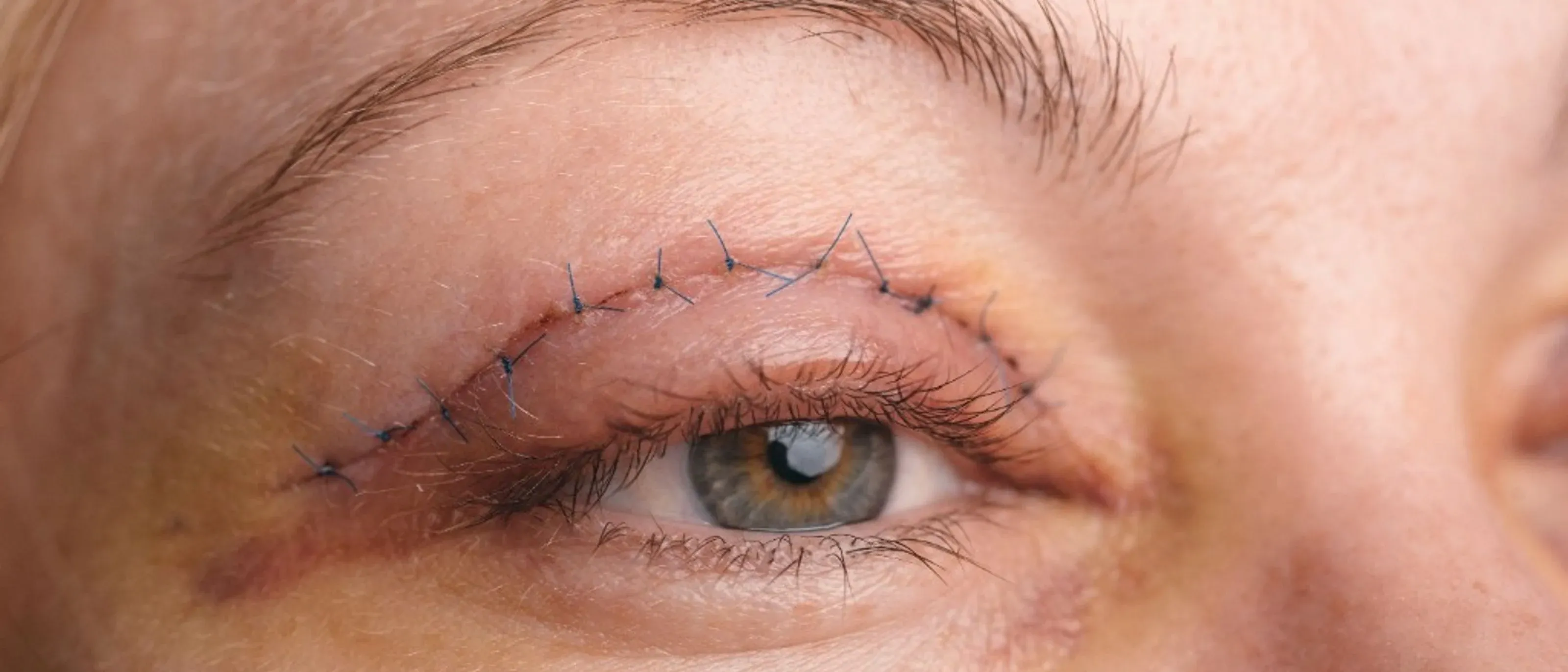
“The aftercare was excellent, I always knew who to contact and exactly what to do. That made a real difference to how I felt about the whole process.”
Transparent pricing.
Self-pay fees are confirmed in writing at the time of booking. If you have private insurance with Aviva, Allianz, Alliance Healthcare, Bupa or Vitality, please discuss this with us when booking so we can confirm cover and pre-authorisation. NHS consultations and procedures at Queen Alexandra Hospital are arranged via your GP and have no charge to you.



- Initial private consultation £230
- Follow-up consultation £140
Surgery on the published price list is a single all-in price covering my fee, the hospital's fee and your post-operative review, so there is no separate hospital bill afterwards. Orbital and socket surgery, and tear duct operations that are not on that list, are quoted individually.
See the full price listHow to get an appointment.
Speak to your GP or optometrist. They can refer you via the standard NHS pathway to the eye department at Queen Alexandra Hospital, Portsmouth. Whether the operation itself is funded depends on your integrated care board and not on a national rule, so it is worth checking what your own area funds first.

I am recognised by Aviva, Allianz, Alliance Healthcare, Bupa and Vitality for private ophthalmic care. You will need a referral letter from your GP and a pre-authorisation code from your insurer. Contact Gina to arrange your appointment.
A formal referral letter is helpful but not essential. You can book a time online, or contact my secretary to discuss timings, fees and venue.
Book online
Make an enquiry.
Private consultations are arranged through my secretary, Gina.
Or use the secure enquiry form here to get in touch.
NHS appointments at Queen Alexandra Hospital are arranged via your GP or optometrist through Portsmouth Hospitals University NHS Trust.
For urgent eye problems please call NHS 111, or contact eye casualty on 02392 286000, ext 6162.